

Wetlands, Willows, and Trout: What’s Happening in the Kawuneeche Valley
Our latest newsletter describes KVRC's tailored restoration approach and dives into trout fishing in the Kawuneeche Valley.
A Closer Look at KVRC's Tailored Restoration Approach
As our work at the Beaver Creek site shifts to planting and monitoring, planning is underway for our next project site, Onahu Creek.
Just as a physician would treat a broken bone differently from a sore throat, each of our project sites—Beaver, Onahu, Upper Baker, and Lower Baker Creek—has unique needs, and our restoration methods are specifically tailored to address them. Click the button below to read about how and why restoration at Beaver Creek and Onahu Creek will look slightly different.
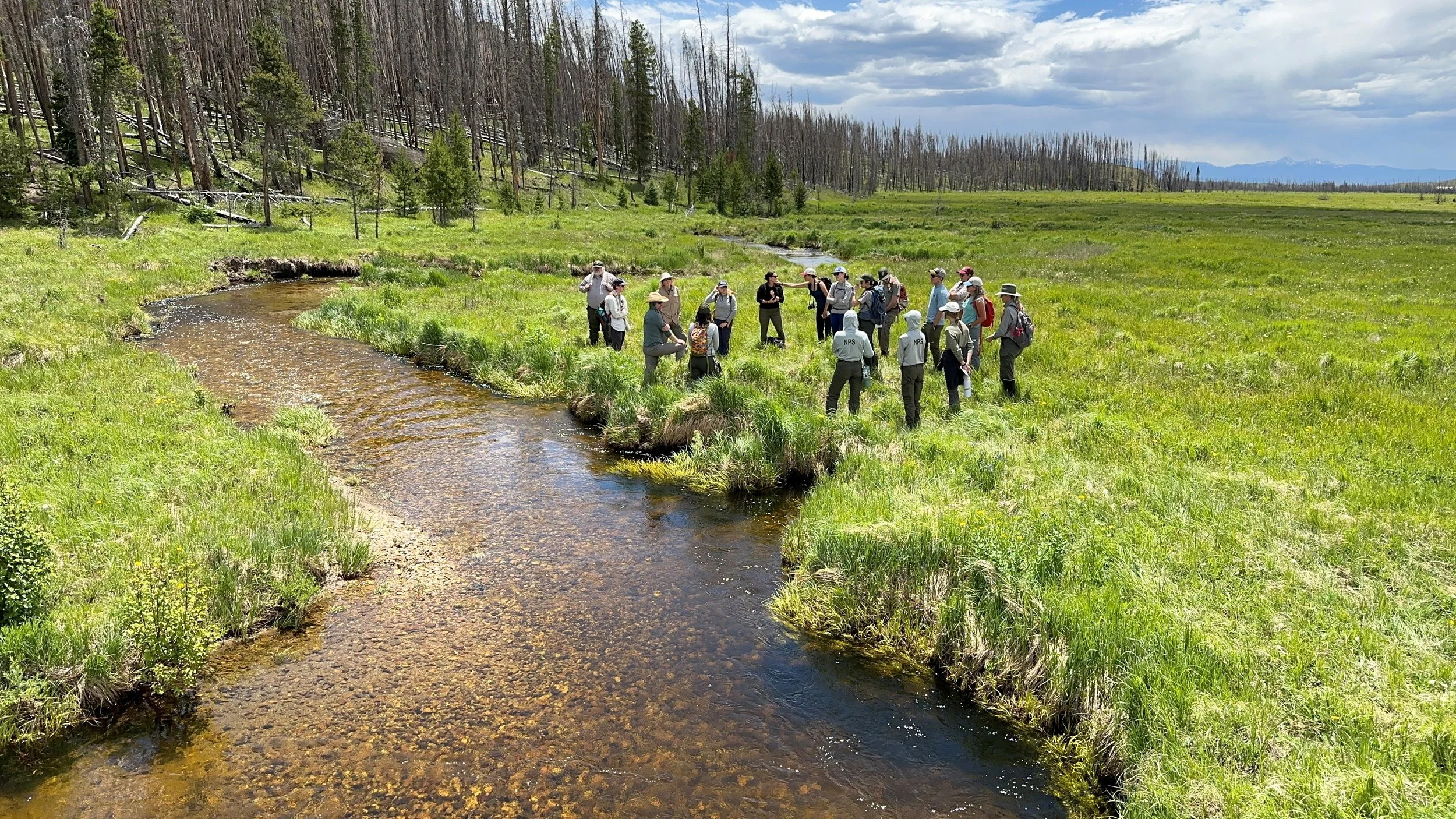
Reviving Valley Life and Habitat for Trout
The Valley has drawn fishers for generations, including the Holzwarth family. These homesteaders invited fishers to the Holzwarth Trout Lodge and dude ranch as a retreat from city life. You can still visit some of the remains of these early vacation spots at the Holzwarth Historic Site, located in the Valley on the west side of Rocky Mountain National Park. Click the button below to read more about trout fishing in the Kawuneeche Valley.
Wildfire Mitigation in the Valley
Did you know healthy wetlands are powerful allies in wildfire mitigation? The high moisture content in wetland soils and riparian vegetation creates natural firebreaks. These vital ecosystems act like sponges, absorbing and storing water that keeps the surrounding landscape hydrated and reduces the amount of dry, combustible fuel available for a fire to spread.
When healthy, the Kawuneeche Valley’s floor includes wetlands. The Valley’s natural hydration and the presence of green, less volatile plant life mean that its wetlands can effectively slow or even stop the advance of wildfires. Healthy wetlands cool the area’s ambient temperature, create a critical buffer zone, and make it harder for flames to jump and ignite new areas.
Investing in the health and restoration of the Kawuneeche Valley’s ecosystem is not just an environmental good; it's a proactive and natural defense strategy against the growing threat of wildfires, building a more resilient landscape for everyone.

Thank you for your continued support in revitalizing the Kawuneeche Valley. Your engagement is crucial as we work to restore this vital part of Colorado’s water landscape.