

Restoration in Motion: Recent Milestones in the Kawuneeche Valley
A Message As We Look Ahead
We extend our deepest gratitude to the agencies and individuals who fuel KVRC’s mission. From our dedicated funders to the volunteers who got their hands dirty planting at Beaver Creek in 2025, our progress is your progress. We are honored by your support and look forward to continued partnership as we build a more resilient future for the Kawuneeche Valley. Stay tuned for more updates on Beaver Creek and news about our next project site, Onahu Creek!

Proof of Progress: Transformation at Beaver Creek
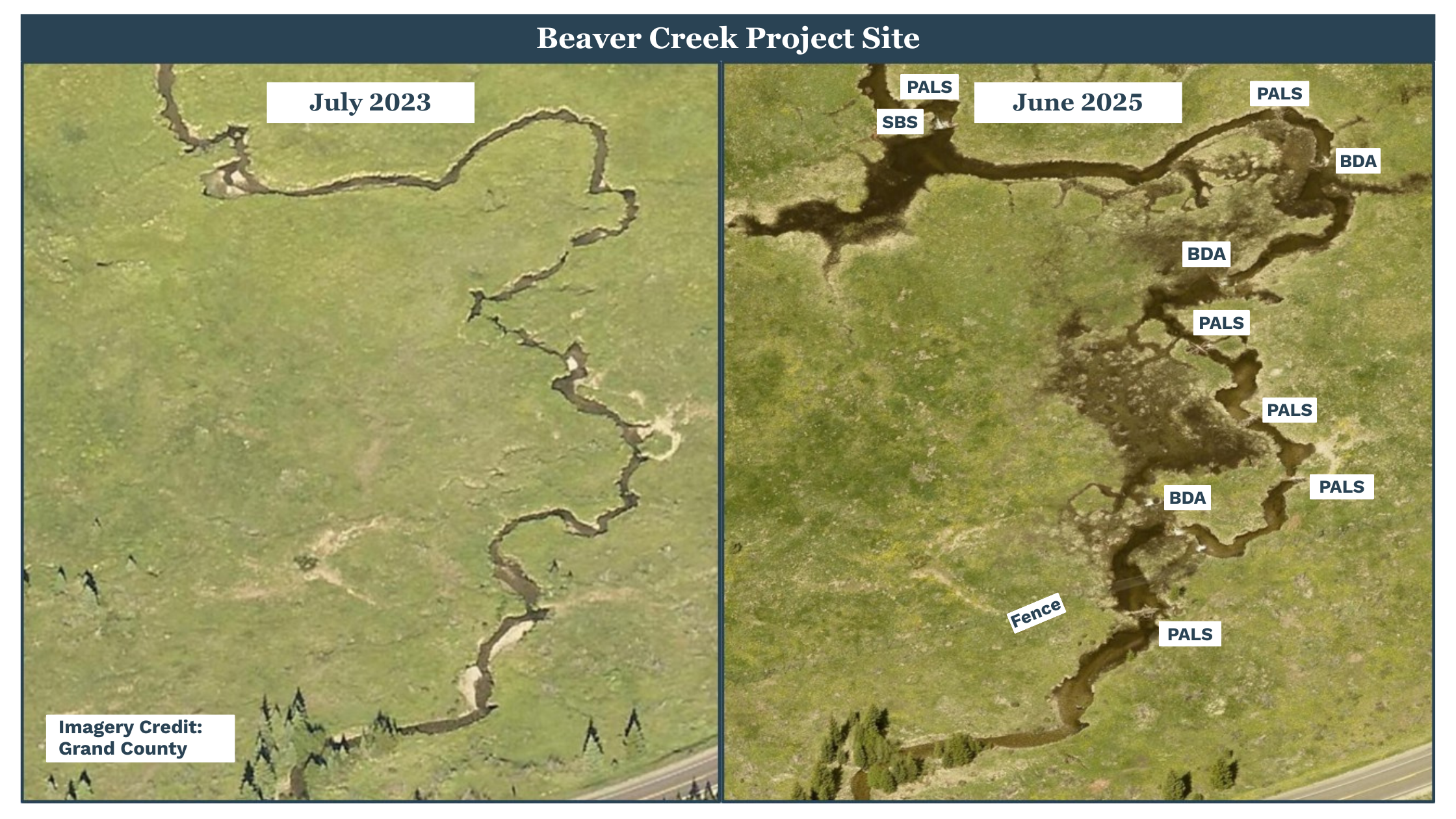
The aerial images below, courtesy of Grand County, capture the transformation at Beaver Creek over just two years. The 2023 image (left) shows an eroded creek and an unhealthy riparian area that sparked our plans for Beaver Creek. Notice how the water is confined to a single, narrow channel, leaving the surrounding floodplain dry.
Fast-forward to June 2025 (right), and the landscape tells a new story. The stream is widening, and pools of surface water are forming, particularly around the restoration structures we installed. You can explore the specific structures we used on our Beaver Creek webpage!
The growing ponds are an indicator of progress in restoring the ecosystem. While complete restoration is a decades-long journey, these early signs are inspiring and informative. They show us which techniques work best in this specific environment, allowing us to adapt and improve our strategy in real-time.
Our 2025 Milestones
2025 was a landmark year for KVRC. From marking our first anniversary of restoration at Beaver Creek to planting new life alongside community members, every milestone brought us closer to a restored ecosystem. Here are the numbers behind our progress:
1,700 willows and alders planted at Beaver Creek: Recovering native vegetation, like willows and alders, is a core component of our restoration strategy. Local elk and moose populations heavily browsed the original wetland vegetation in the valley. These new plantings provide the essential boost necessary to repopulate and contribute to a healthier ecosystem. A huge thank you to the volunteers, Rocky Mountain National Park staff, and KVRC members who got their hands dirty to make this happen!
Achieved 90% completion on our plans for Onahu Creek: Restoration isn't one-size-fits-all; every site requires a custom strategy informed by extensive monitoring and data. We are putting the finishing touches on our Onahu Creek design and expect boots on the ground later this year!
14 Connections with You: An inspiring aspect of working in the Kawuneeche Valley is hearing about how much others love this place, too! We hosted numerous site tours and shared our mission through several local presentations.
2.5 football fields of inundation at peak flow at Beaver Creek: Our instream structures at Beaver Creek performed well, indicating the site is on the way to meeting our restoration goals. Monitoring data show that during high flow in 2025, approximately 2.5 football fields of area were inundated, meaning surface water was pushed out of Beaver Creek and onto surrounding land. This inundation successfully brought water back to former beaver habitat while also recharging the groundwater table. Additionally, we observed fine-grained sediments settling on the floodplain and around our instream structures, another restoration goal, due to slower water movement in ponds and during overbank flow.
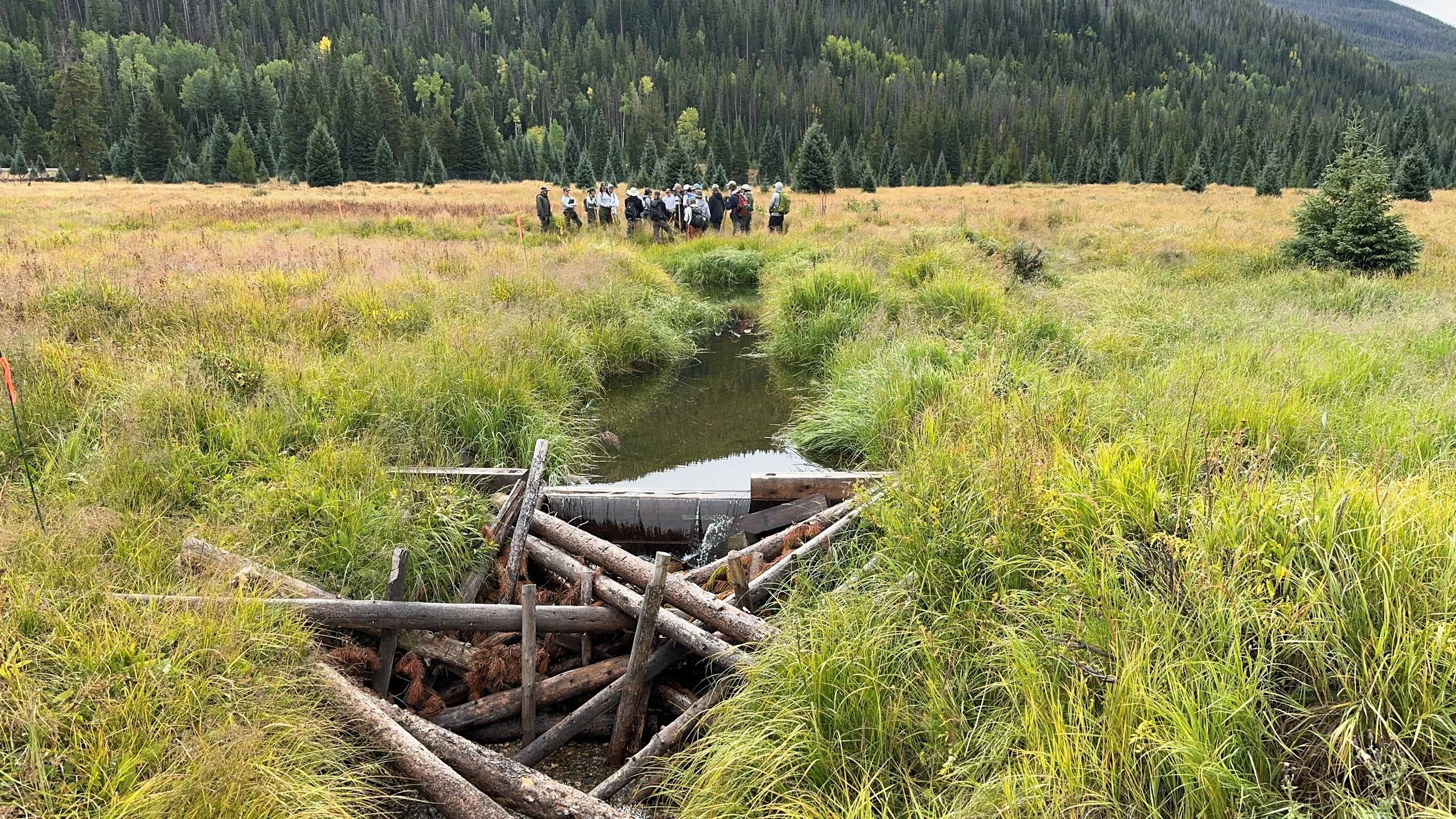
Adaptive maintenance of instream structures at Beaver Creek: Beavers are called busy for a reason; they typically work daily to maintain their dams. Our instream structures require similar work. We completed adaptive maintenance on our structures at Beaver Creek over the course of two weeks in September and October. Repairs primarily involved adding native vegetation, specifically lodgepole pines, to Beaver Dam Analogs (BDAs) and Post-Assisted Log Structures (PALS). This strengthened their contact with the stream banks, allowing in-channel flows to move primarily through and over structures, rather than around them. We also repaired a Simulated Beaver Structure (SBS) and added a BDA, where the stream taught us a valuable lesson about where it naturally wants to flow.
50 acres treated for exotic plants: Park staff and Rocky Mountain Conservancy’s Conservation Corps treated Canada thistle at Beaver Creek and Onahu Creek in 2025. Canada thistle can take over in dried-out wetlands and out-compete native vegetation. We expect the combination of herbicide and inundating the floodplain to control the Canada thistle, allowing native flora to flourish.
A Year of Significant Progress, Made Possible by Our Dedicated Funders
2025 marked significant progress at Beaver Creek and Onahu Creek. This comprehensive work is possible thanks to the support of our funders. The following organizations provided valuable financial support to KVRC’s restoration efforts:
The Colorado Water Conservation Board provided critical funding for monitoring at the Beaver Creek project site. Monitoring ensures KVRC can assess the long-term viability of its restoration strategies and supports adaptive management.
The Windy Gap Environmental Fund, administered by the Grand Foundation, funded exclosure fencing, exotic plant treatments, and willow and alder planting at Beaver Creek. The fencing and removal of exotic plants support native vegetation, which plays a vital role in the Kawuneeche Valley’s ecosystem.
The National Fish and Wildlife Foundation, with support from Great Outdoors Colorado, Oxy, and the Walton Family Foundation, awarded KVRC a competitive grant through RESTORE Colorado to support construction of the instream structures built at Beaver Creek. The RESTORE grant also supports adaptive management and will enable the installation of exclosure fencing at Onahu Creek.
Wetlands for Wildlife, awarded by Colorado Parks and Wildlife, will fund KVRC's project implementation at Onahu Creek, and currently funds educational outreach about the Beaver Creek site.
Upcoming work at Onahu Creek, including exclosure fencing, instream structure builds, and exotic plant treatments, is made possible in part by a grant from the National Park Foundation.
The WaterSMART Aquatic Ecosystem Restoration Project grant from the US Bureau of Reclamation provided critical support for project design and monitoring at the Onahu Creek, Upper Baker Creek, and Lower Baker Creek project sites. The project designs will include instream structures, exclosure fencing, removal of exotic plants, and revegetation.
Several KVRC collaborators, including Northern Water, Rocky Mountain Conservancy, and The Nature Conservancy, provide ongoing funding that is pivotal in supporting KVRC’s work. Each collaborator also contributes in-kind time to design, implement, and advance KVRC’s work.
The Colorado State University Extension Internship Program supported a field assistant to help with restoration monitoring along Beaver Creek in summer 2025.
Past support from the Colorado River District’s Accelerator Grant was instrumental in moving KVRC to this stage in its plans.
Busy Beavers at Holzwarth
The Holzwarth Historic site is located on the west side of Rocky Mountain National Park along the Colorado River, about a mile from KVRC’s Beaver Creek project site. While KVRC isn't working directly at Holzwarth, the area provides clear evidence that beavers can thrive in the Kawuneeche Valley when conditions are right.
In 2011, Rocky Mountain National Park installed a 16.5-acre exclosure fence along the Colorado River near Holzwarth to restore willow habitat and alleviate pressure from elk and moose browsing. Today, this is one of several small, fenced areas in the Kawuneeche Valley that illustrate how these ecosystems can function. The rest of the valley still faces significant pressure from elk and moose, and is dominated by grasses with dead or nearly dead tall willows that once flourished here.
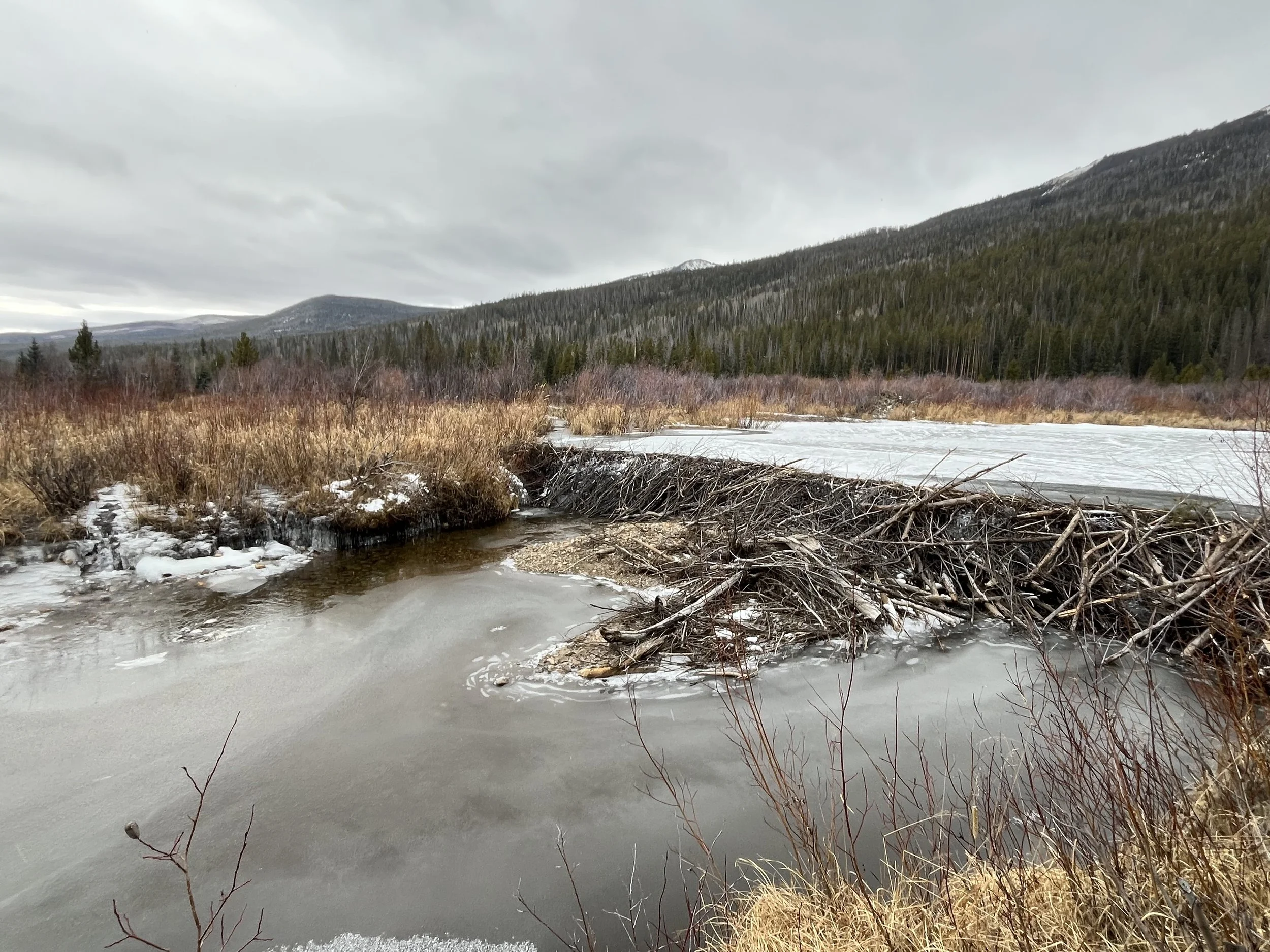
Take a look at the beaver dam pictured below, which was taken at Holzwarth in November 2025. These dams create deep pools that sustain an entire ecosystem; they water thirsty willows and replenish the water table. The local beaver colony at Holzwarth is responsible for this engineering, proving just how quickly nature can heal itself.
KVRC has no plans to reintroduce beavers at project sites. Our approach is nature-based: rather than reintroducing beavers, we are rolling out the welcome mat. By restoring healthy willow stands and rewetting former beaver-ponded areas, we will create the "perfect home" to entice these natural engineers to migrate back on their own.
The beaver activity at Holzwarth gives us hope that natural migration is possible. We look forward to the day that beavers venture into our restored sites to put the finishing touches on the groundwork we’ve laid!
Thank you for your continued support in restoring the Kawuneeche Valley. Your engagement is critical as we work to revitalize this vital part of Colorado’s water landscape.